
YouTube Algorithm & Updates
How the YouTube algorithm works and what each YouTube update changes for creators, explained plainly and measured against real channel data.
The YouTube algorithm is not one secret formula. It is a set of systems that decide which videos get shown, and YouTube changes the rules around them every few months: how views are counted, what monetization requires, how Shorts and long-form share an audience. This section covers both. When YouTube announces an update, we explain what changed, what it means for creators and what to do about it. When our data can measure the effect, we add that too, because a change you can see in real channels is worth more than a change you only read about.
Every measured figure here comes from the TubeAI research database: the uploads, view readings and subscriber readings of creator channels we track. We compare each video with its own channel's normal performance, so a small channel's result counts as much as a big channel's.
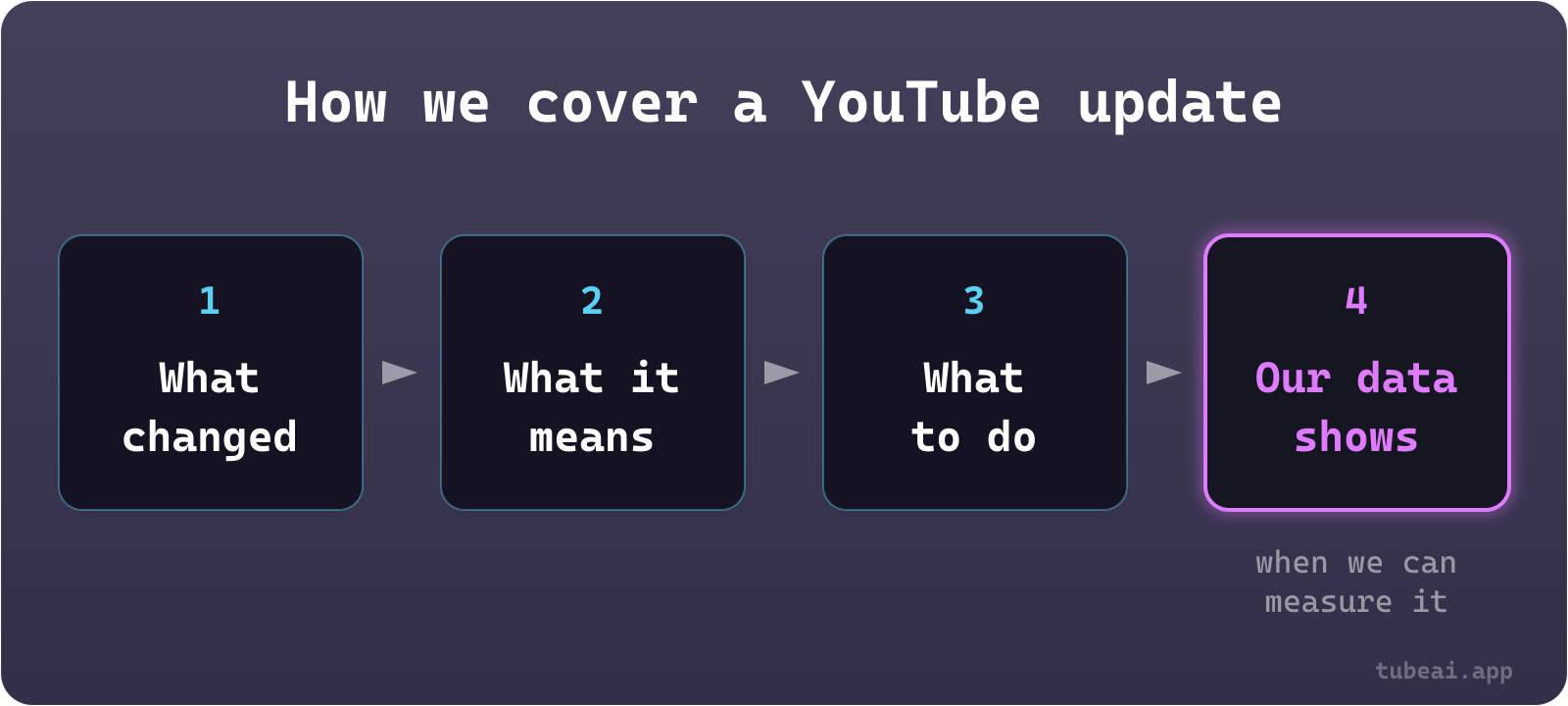
- 3,302,557long-form videos scoredpublished Jun 1-Sep 20 2026
- 821,099published after Aug 24under YouTube's new view count
- 313.4Mview readingsrecorded Sep 7-27 2026
What you'll find here
YouTube updates, explained
What YouTube changed, in plain words, what it means for your channel and your reporting, and what to do next. Each post links the announcement and the main coverage, and adds our measurements when the change shows up in the data.
How recommendations work
What YouTube says its systems reward, and what the performance of real videos suggests they reward in practice.
How views build over time
How fast a video collects its views, when it stops growing, and how often older videos come back.
Why small channels break out
How a video from a small channel can outperform a big channel's, and what those breakouts have in common.
Common questions
How does the YouTube algorithm work?
YouTube's systems pick which videos to show each viewer based on what that viewer and similar viewers watch, click and keep watching. There is no single ranking formula to game; the videos that win are the ones people choose and stay with. The posts in this section break down the parts we can observe.
Does this section cover every YouTube update?
It covers the updates that change something for creators: how views, watch time or earnings are counted, what monetization requires, and how videos get distributed. Minor interface changes are left out.
Where do the measurements come from?
From the TubeAI research database, which tracks the uploads, view counts and subscriber counts of creator channels. Each measured figure has a source line saying how many videos or channels it covers and over which dates.
Latest in YouTube Algorithm & Updates
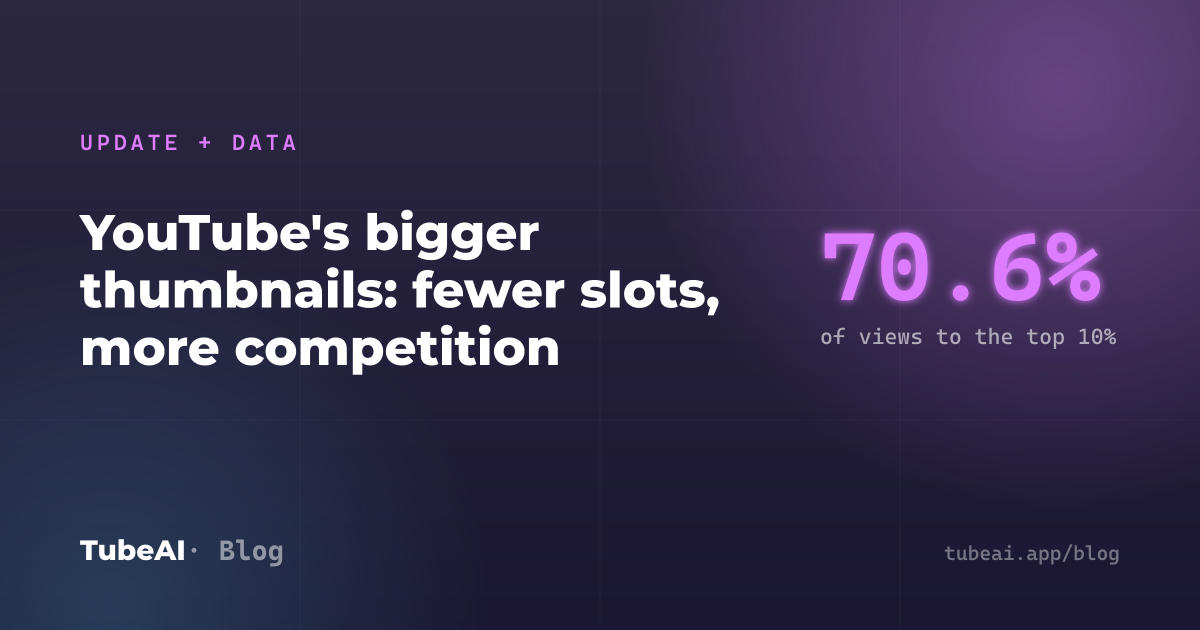
YouTube's bigger thumbnails: fewer slots, more competition, and what the data shows
YouTube's home feed shows fewer, larger video cards, with Shorts shelves in between. Here is what changed and how 319,550 tracked uploads split their first-week views.
· 8 min read
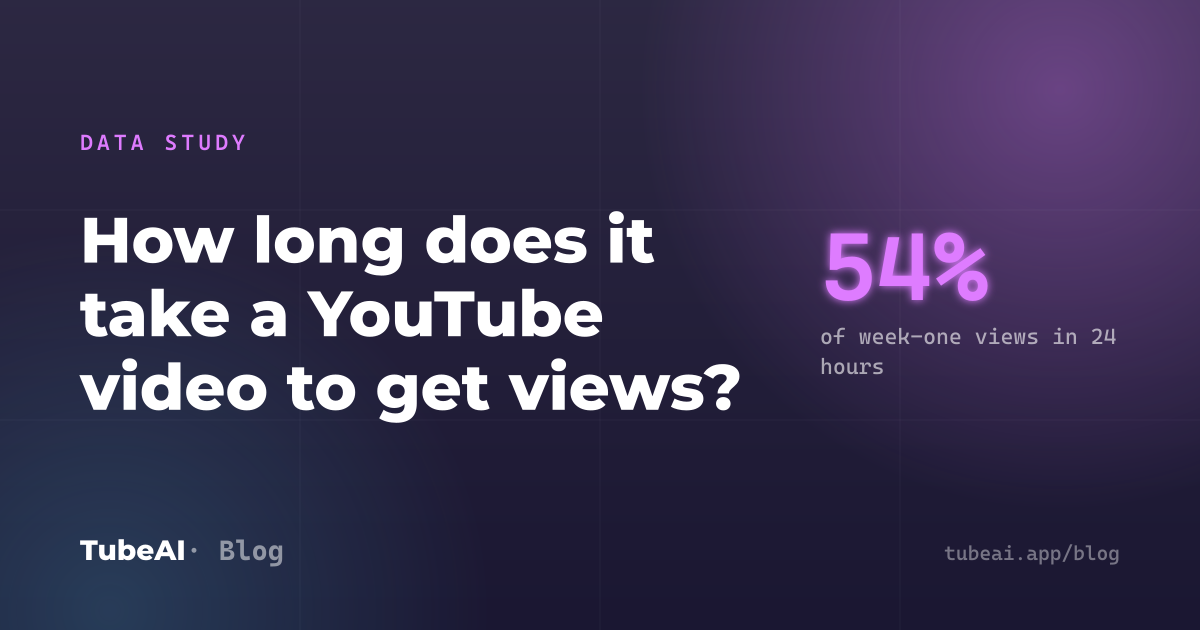
How long does it take a YouTube video to get views? What 321,220 tracked uploads show
I tracked 321,220 uploads hour by hour through their first week. Most views arrive within a day, but the videos that break out follow a slower, longer curve.
· 8 min read
The tai chi walking scam: how hidden-subscription ads took over YouTube, and what they cost creators
The "62 and ripped" tai chi walking ads are not a meme. They are a $195.6M YouTube ad campaign for a subscription app whose parent group is now under an FTC asset freeze. Here is how the funnel works, why the ads look absurd on purpose, and how this money reshapes YouTube's ad auction for everyone else.
· 11 min read
YouTube's new view count: what changed, and what it did to the numbers
On Aug 24 2026 YouTube started counting a view the moment any video starts playing. Here is what changed, what did not, and what it did to the numbers across 3.3 million videos.
· 8 min read